A field guide to Baltistan.
Five thousand square kilometres of valley, glacier, fort, lake and desert — wedged between four of the world's fourteen eight-thousanders. What to know, where to go, and what to eat while you're here.
A valley at the
crossroads.
Caravan stop. Royal seat. Apricot orchard. Architectural treasury. Quiet still.
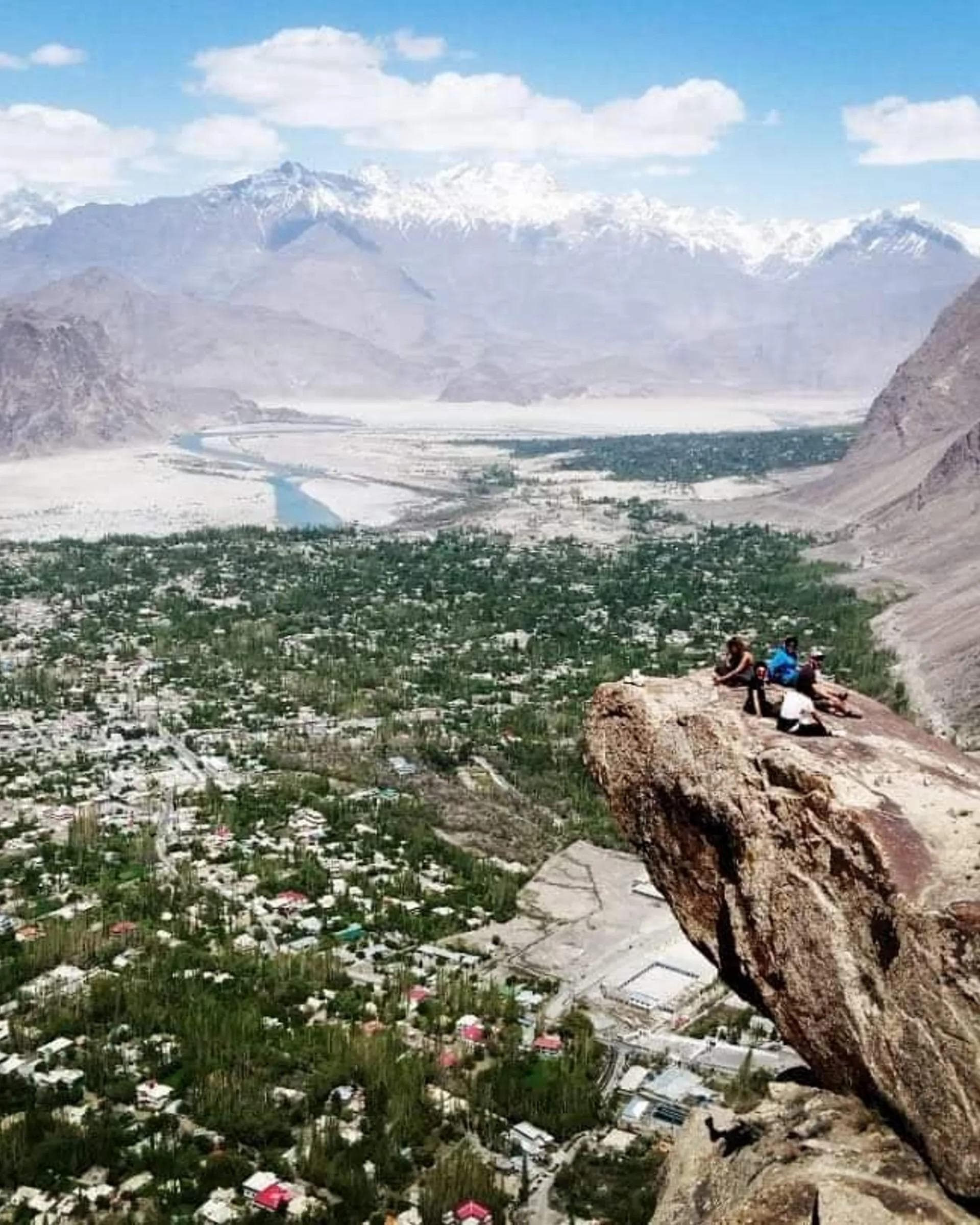
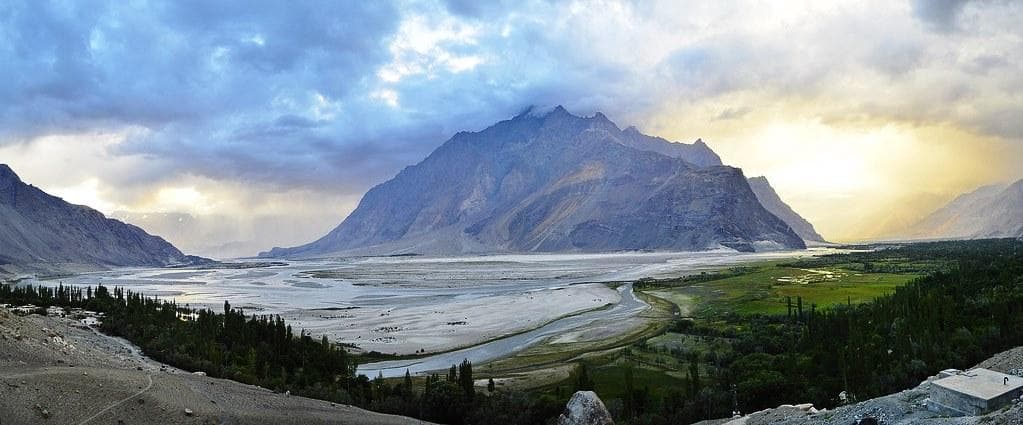
Situated in the heart of the Karakoram, the Shigar valley — and Baltistan more broadly — has spent the last fifteen centuries as a quiet but consequential cultural crossroads, connecting the inner mountain world to Central Asia, Ladakh, Kashmir and the wider Tibetan plateau.
Historically linked through caravan routes that branched off the ancient Silk Road, Shigar saw the movement of traders, pilgrims, scholars, craftsmen and explorersacross some of the highest mountain corridors on Earth. Those exchanges left behind a layered inheritance — Tibetan structural language, Persian decorative detail, Central Asian craft, South Asian motif — visible today in the valley's forts, mosques, irrigation channels and the cadence of everyday speech.
Shigar is also deeply rooted in Balti heritage. Language, oral storytelling, polo, music and communal traditions have been preserved across generations within the valley's closely connected settlements. Surrounded by towering peaks and a long history of relative isolation, Shigar's communities developed a distinct identity shaped by both the harsh mountain environment and centuries of intercultural exchange.
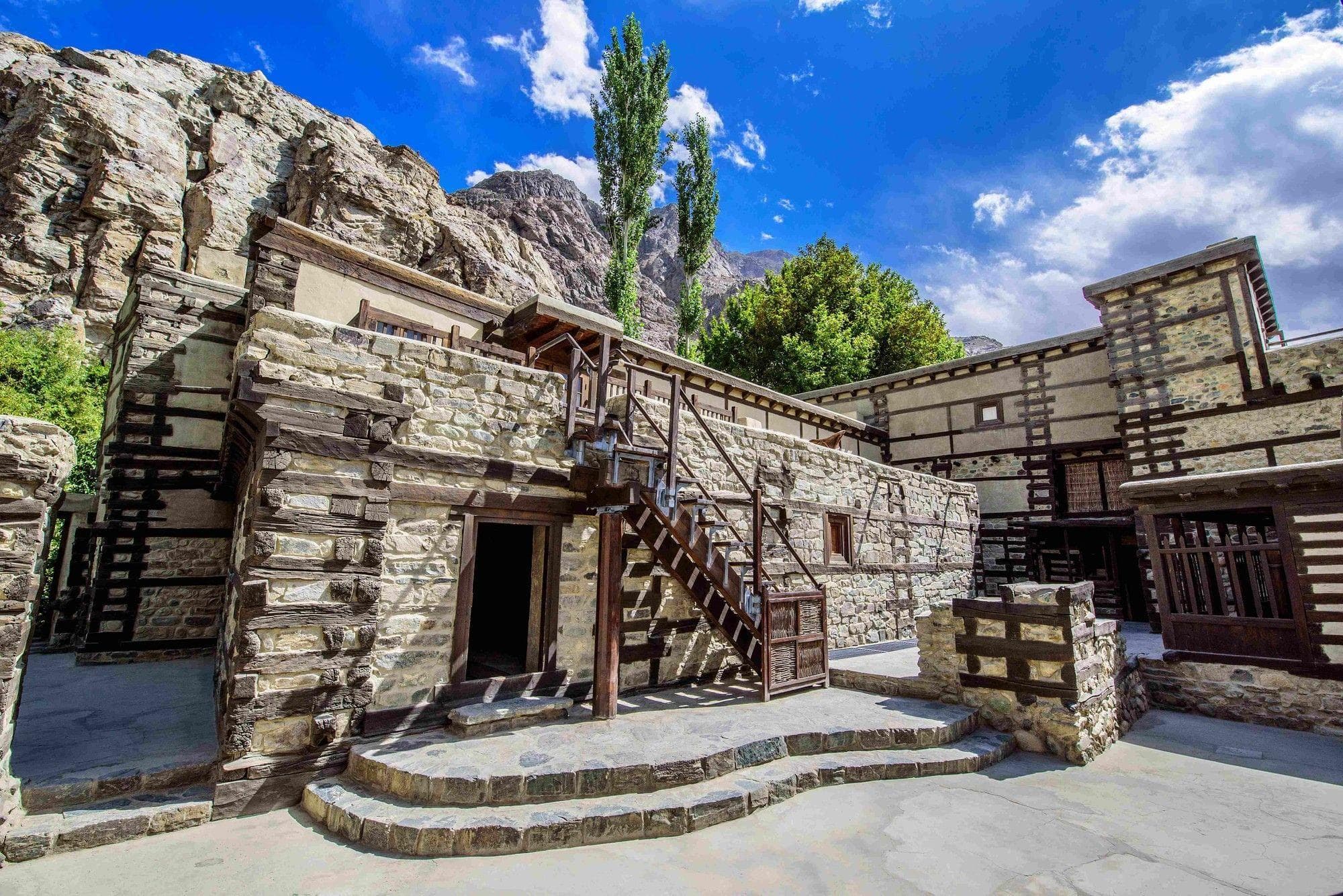
At the centre of all this sits the 17th-century Fong Khar — Palace on the Rock — built by Raja Hasan Khan, the 20th ruler of the Amacha dynasty, using craftsmen brought in from Kashmir. It was abandoned in the mid-20th century, restored by the Aga Khan Cultural Service over five years, and now operates as a heritage hotel and museum. It is a 15-minute drive from Khoj — and one of the sites the cohort will visit during the week.
The numbers that
make this place unreasonable.
Skardu is geographically strange. It's a wide, flat-floored valley sitting at 2,500 m, walled in by mountains five times that high, with deserts, lakes and apricot orchards all within an hour's drive. These are the data points that explain it.
What to do in Skardu,
if you have extra days.
Glacier-fed water,
everywhere.
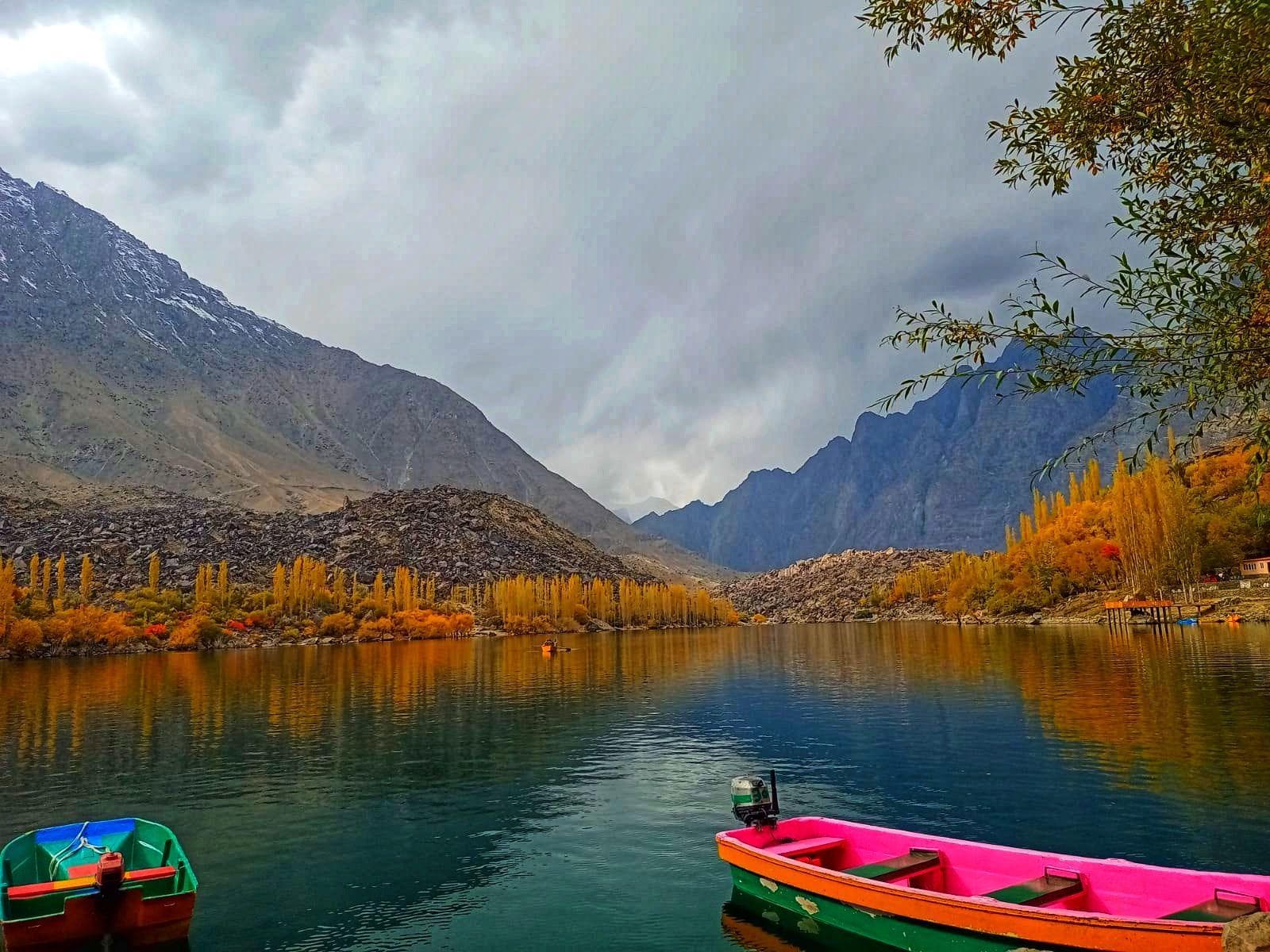
Skardu is built around lakes — most of them spring or glacier fed. Boating, trout fishing, hiking trails, photography. Four are within an hour of Khoj.
LocationUpper Kachura Lake
Crystal-clear, glacier-fed alpine lake — ~70 m deep, ringed by forested mountains. Walking trails, rustic wooden boats, brown trout.
LocationLower Kachura · Shangrila
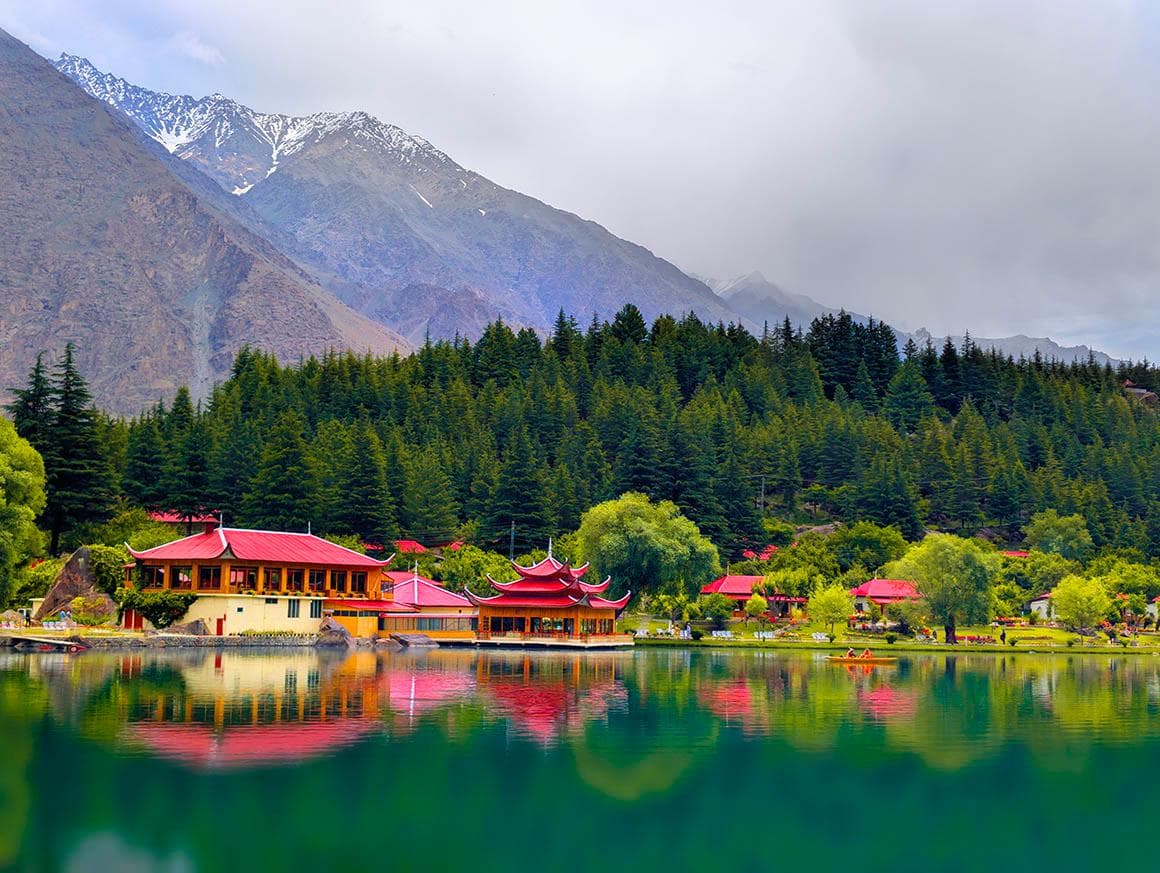
Heart-shaped lake fringed by the famous Shangrila Resort — red-roofed cottages, manicured gardens. Touristy but genuinely beautiful.
LocationSatpara Lake
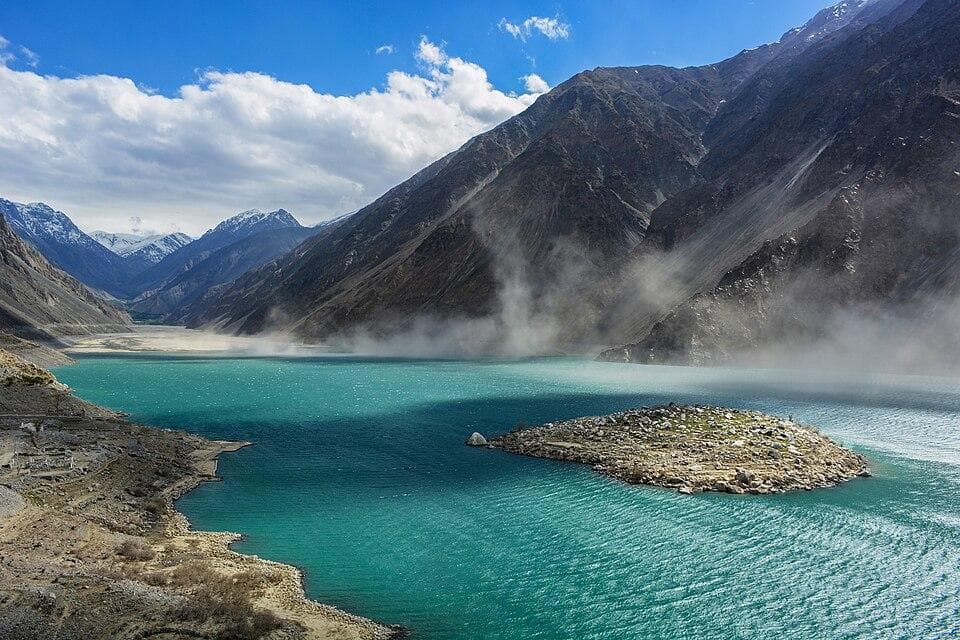
Greenish-blue glacial lake 8 km south of Skardu. A small desert island sits in the middle; local lore claims a gold mine at the bottom.
LocationSheosar Lake
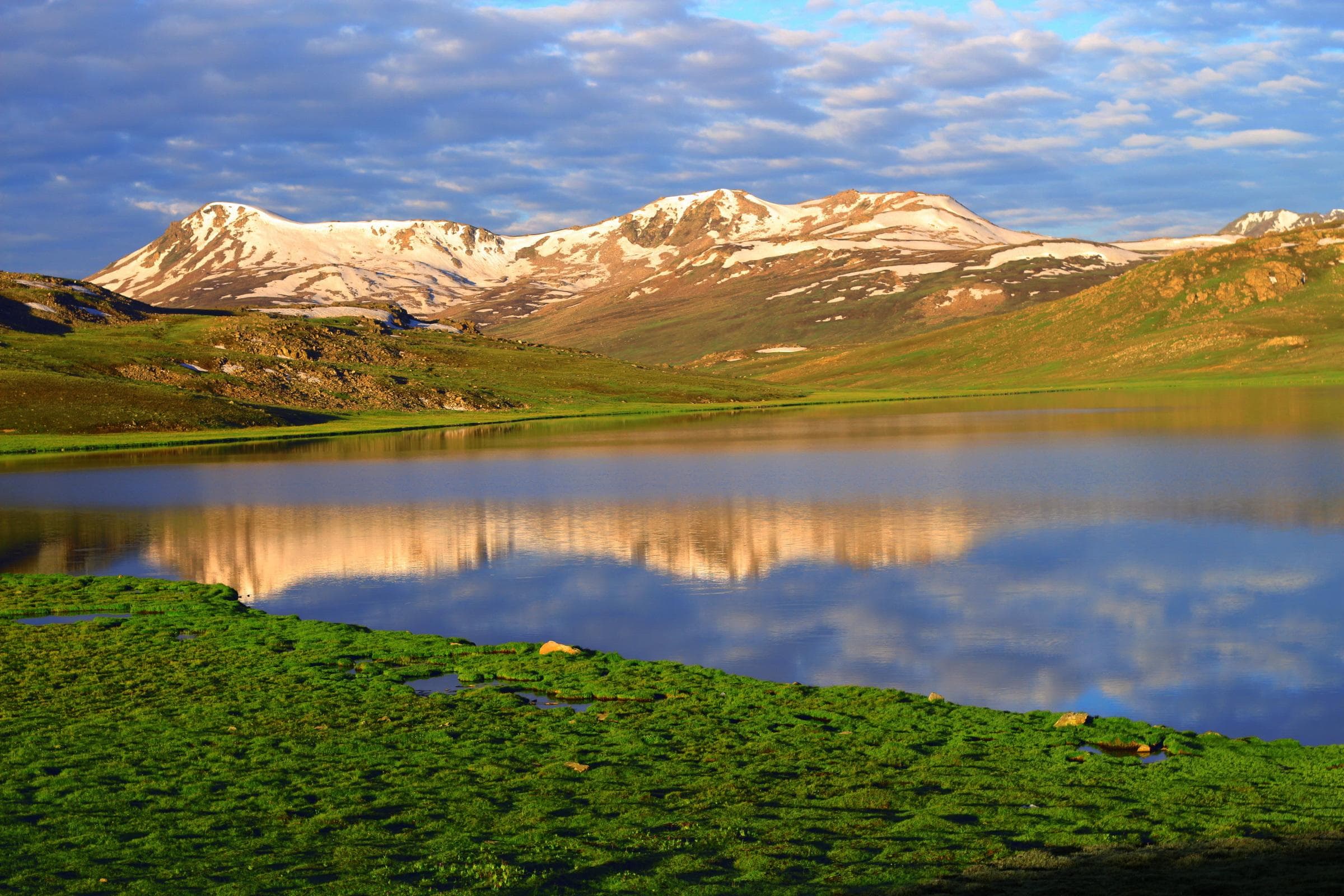
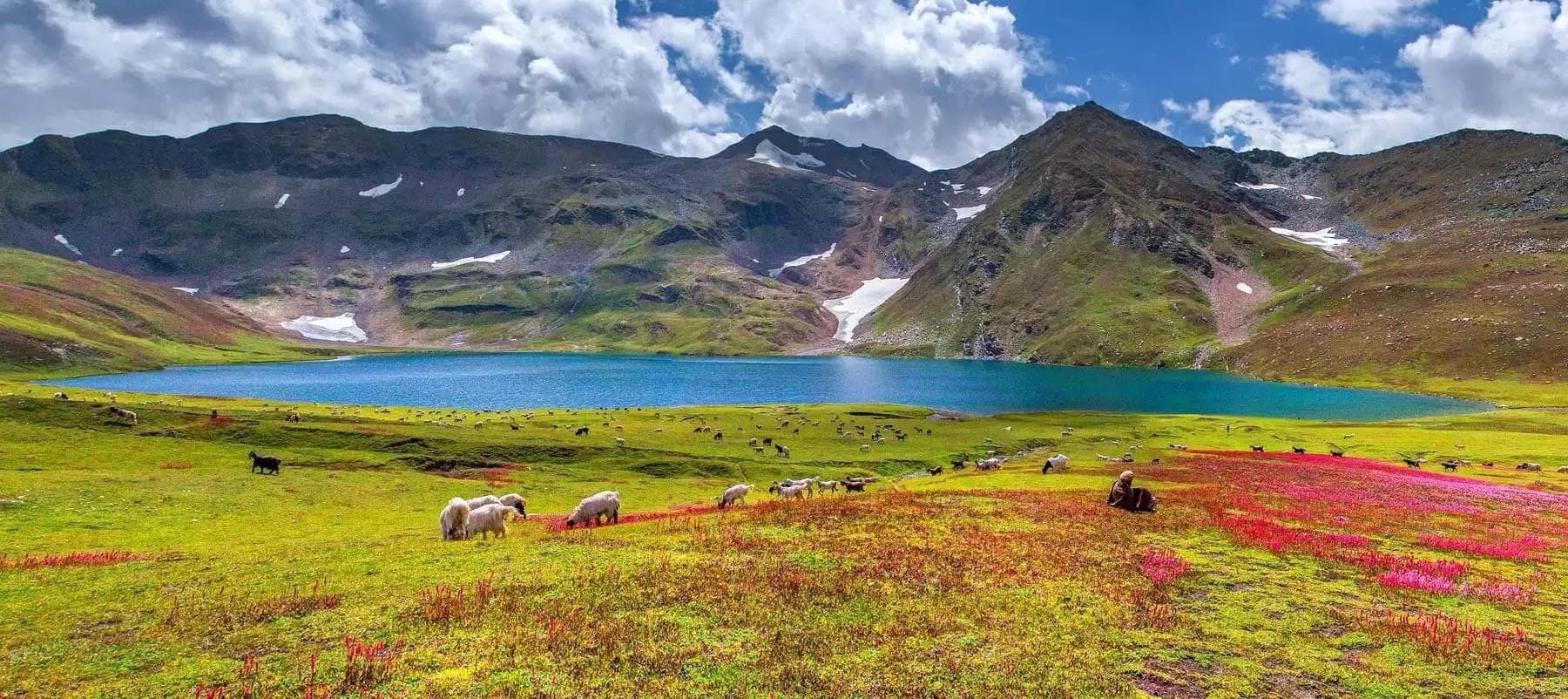
High on the Deosai plateau at 4,142 m — one of the highest lakes on the planet. Wildflowers in summer; reflects Nanga Parbat on clear days.
Forts, mosques,
and a Buddha.
Skardu's heritage is layered — Tibetan Buddhist, Balti royal, Kashmiri craft. Most sites are within 45 minutes of Khoj.
LocationShigar Fort · Fong Khar
Built in early 1600s by Raja Hasan Khan. Construction used Kashmiri craftsmen, with Baltistani, Tibetan, and Mughal influences. Now a 20-room Serena heritage hotel and museum.
LocationAmburiq Mosque
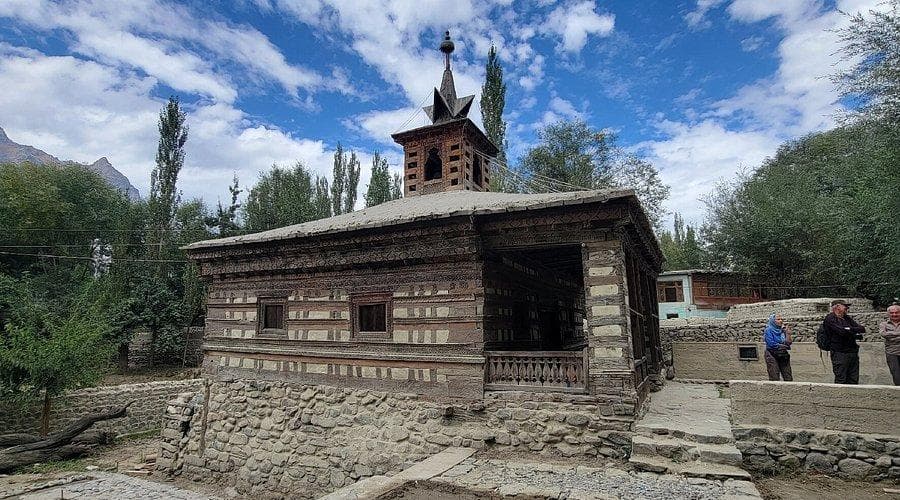
One of the oldest mosques in Baltistan — remarkable Tibetan–Islamic architectural fusion. Built by Iranian craftsmen. Buddhist and Sufi motifs side by side.
LocationManthal Buddha Rock
A three-metre-tall Buddha surrounded by smaller bodhisattvas, carved into granite. Dated to the 8th century, when Baltistan was part of the Tibetan Empire's cultural sphere.
LocationKharpocho Fort
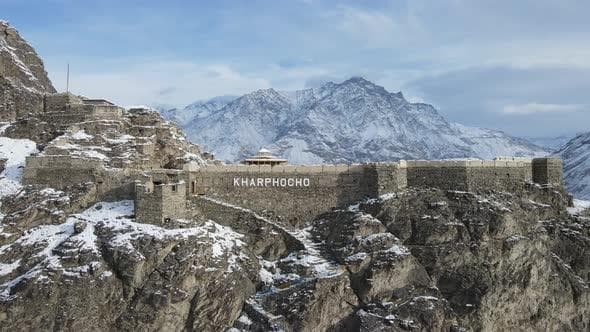
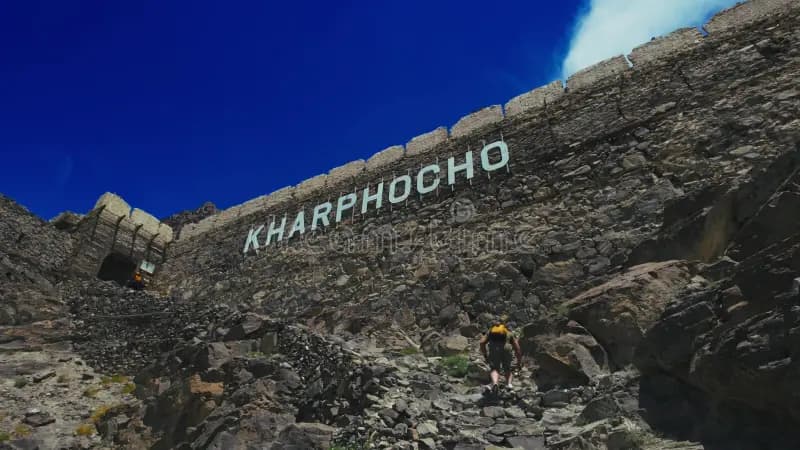
The 16th-century seat of the Maqpon dynasty. Sits on a hill above the Indus on the edge of Skardu town. Most of the structure is gone; the view is the point.
Trails of every
scale.
From 30-minute lakeside walks to the 21-day K2 Base Camp trek. The short walks around Khoj are some of the best things you'll do all week.
LocationK2 Base Camp · Concordia
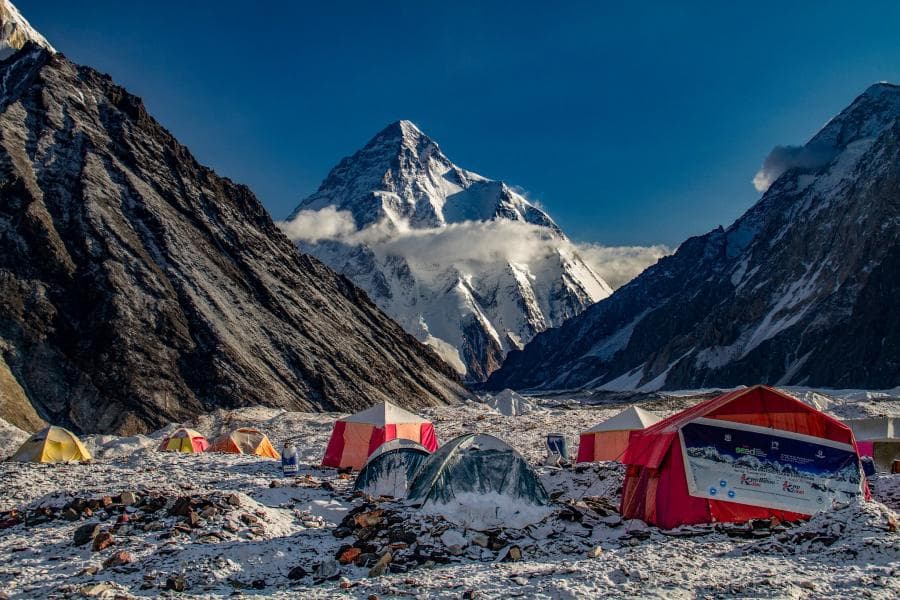
The most legendary trek in Pakistan. A 60-km foot journey up the Baltoro glacier to Concordia, the throne-room cirque where K2, Broad Peak, the Gasherbrums meet. Best June–September.
LocationKharpocho Fort climb
Short, steep walk up to a 16th-century fort overlooking Skardu town and the Indus. Roughly an hour up, 40 minutes down. Panoramic city view; quietly atmospheric ruin.
LocationShigar orchard walks
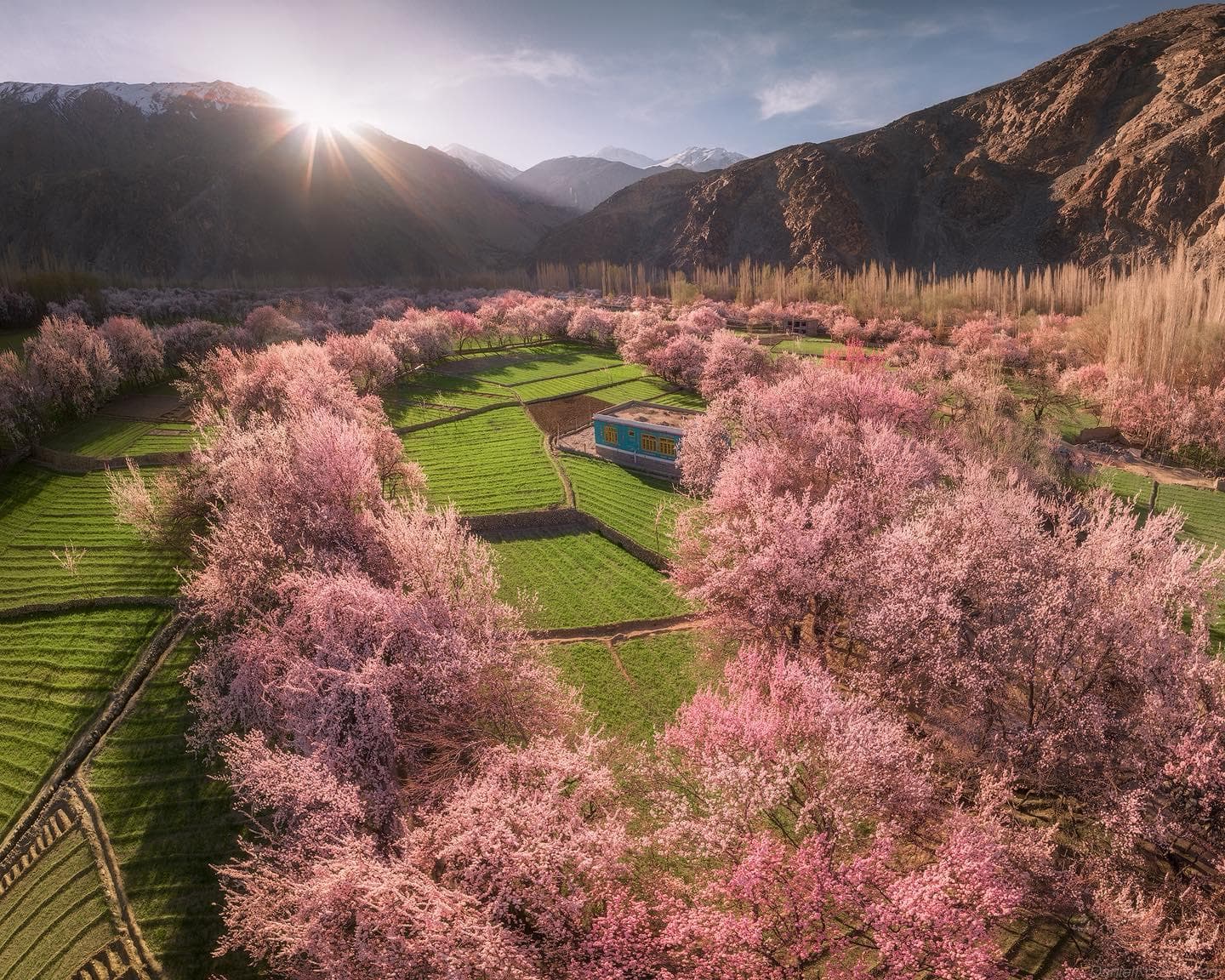
Twenty- to ninety-minute walks through Shigar's irrigation channels, apricot and apple orchards, and small villages. Flat-ish, gentle, surprisingly cinematic.
Sand dunes,
at altitude.
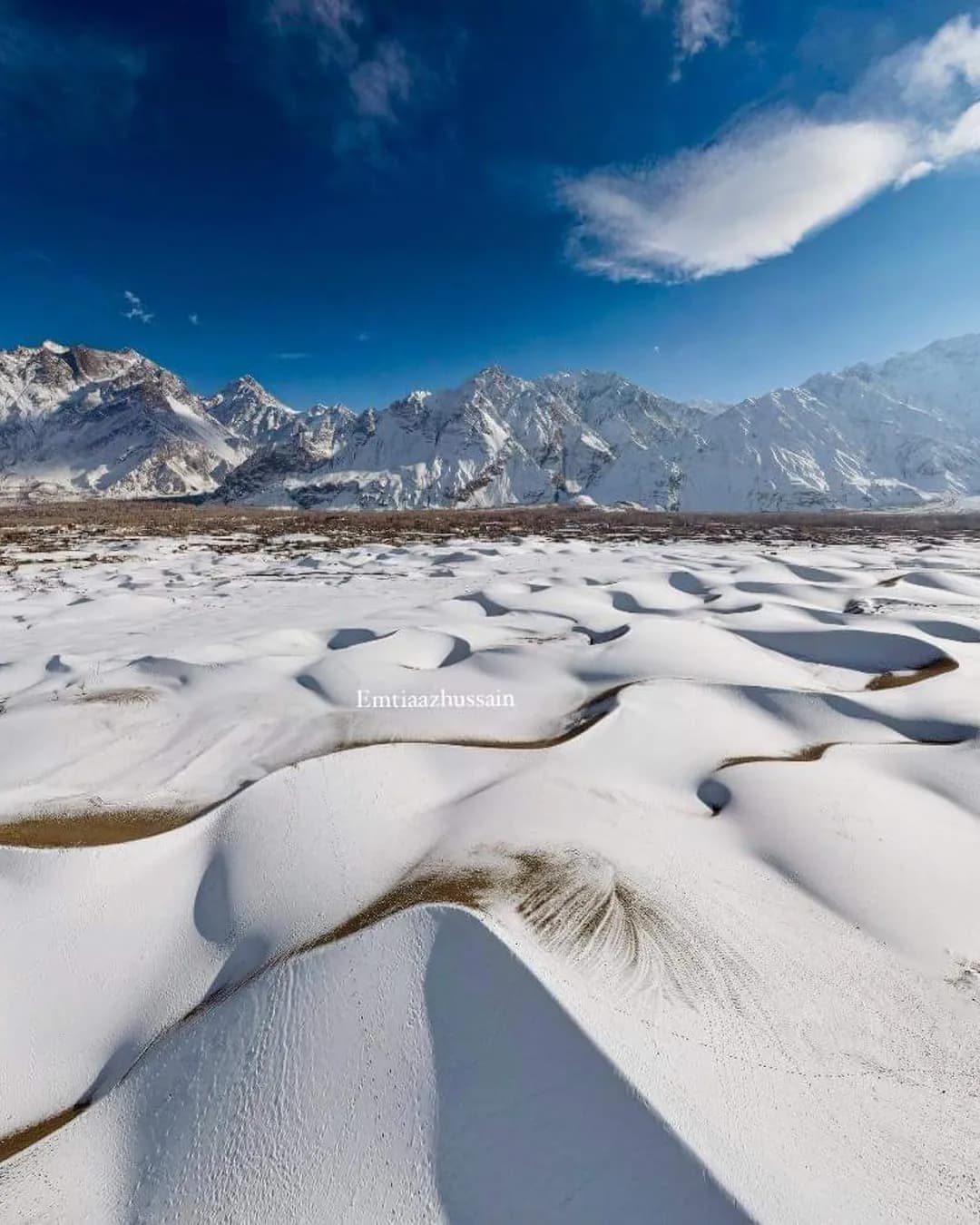
Possibly Skardu's strangest feature: white-sand cold deserts at over 2,300 m, framed by 7,000-m peaks. The Deosai plateau adjoins them — the world's second-highest alpine plain.
LocationKatpana Cold Desert
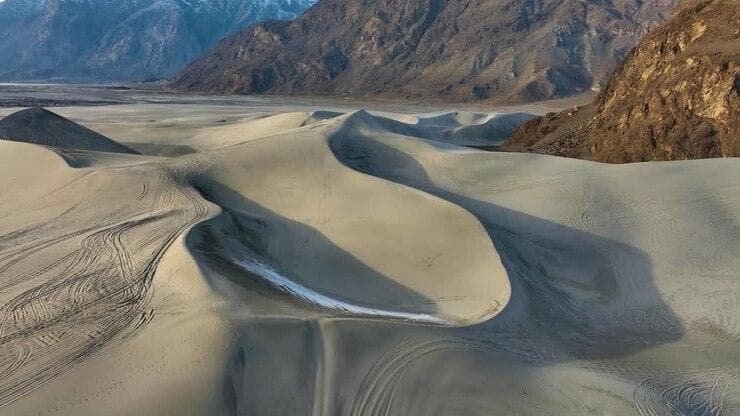
Rolling sand dunes sitting at over 2,300 m altitude — 20 minutes from Skardu town, with the Indus on one side and the Karakoram peaks on the other. A small lake in the middle adds another layer of surrealism. Best at sunset.
LocationSarfaranga White Desert
Even more dramatic than Katpana — in the Shigar valley, framed on three sides by mountains. Hosts an annual jeep rally that draws drivers from across Pakistan. Wide, flat, and almost ridiculous in scale.
LocationDeosai National Park
3,000 km² of high alpine plain averaging 4,114 m. Closed by snow late October to mid-April; open six to seven months a year. Home to Himalayan brown bear, snow leopard, golden marmot, ibex. The drive across via 4×4 is one of the most surreal road trips in South Asia.
Apricots, butter,
barley, buckwheat.
Hearty, simple, mountain food — shaped by altitude, short growing seasons, and centuries of Tibetan and Central Asian influence.
Balti cuisine reflects the region's geography and history. Meals are typically simple, hearty, and built around locally-grown grains — wheat, barley, buckwheat — alongside apricots, dairy products, and seasonal vegetables.
Many of the most distinctive dishes share lineage with Tibetan, Ladakhi, and Central Asian food cultures, a reminder of the caravan routes that once crossed Baltistan.
No. 01Mamtuམོག་མོག་
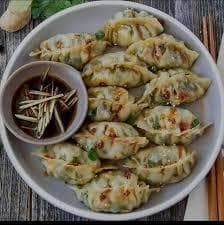
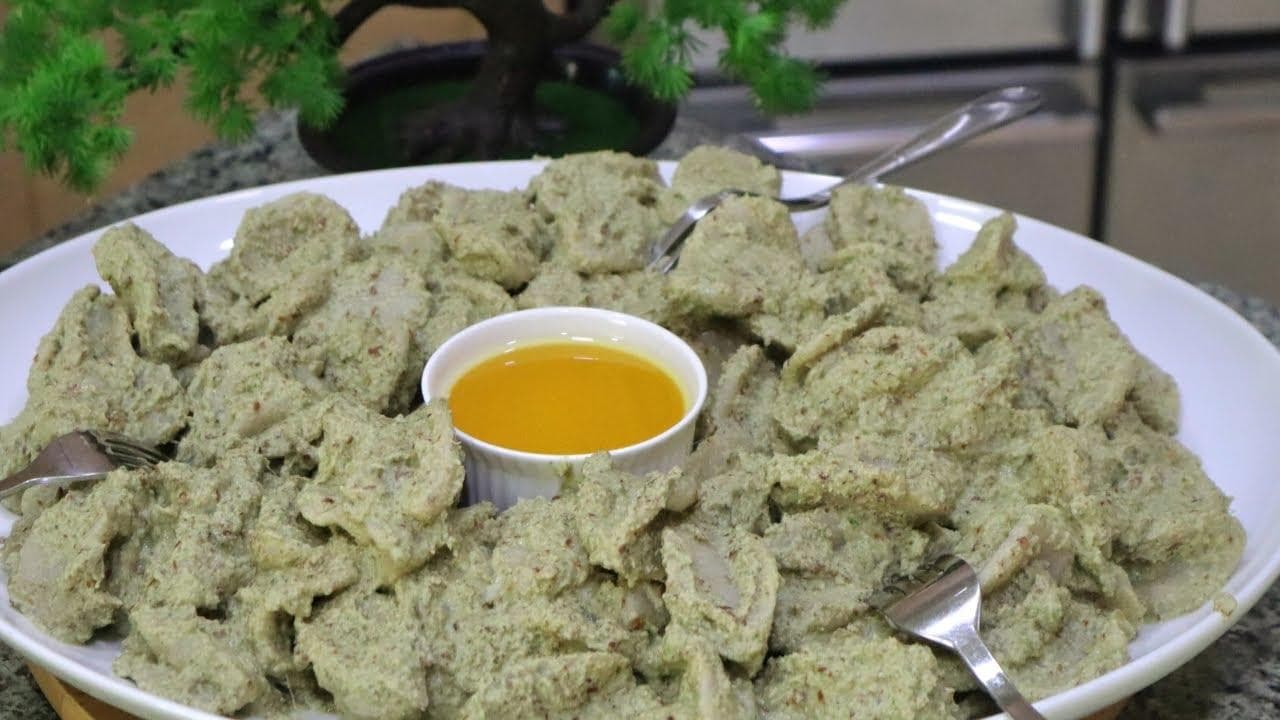
DumplingSteamed dumplings — typically filled with minced meat, onion and spice — directly cousins to the Tibetan momo and Central Asian manti. The defining Balti dish.
No. 02Khurba
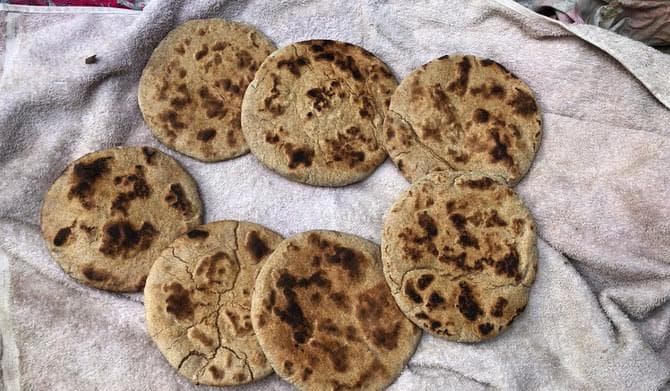
BreadA traditional Balti flatbread — thick, slightly chewy, often baked in a tandoor and eaten warm with butter or apricot jam. Trekkers carry it.
No. 03Prapu
BuckwheatA buckwheat-based dish unique to Baltistan — closer to a savoury crepe than to anything you'll find south of the mountains. Earthy and filling.
No. 04Chapshuro
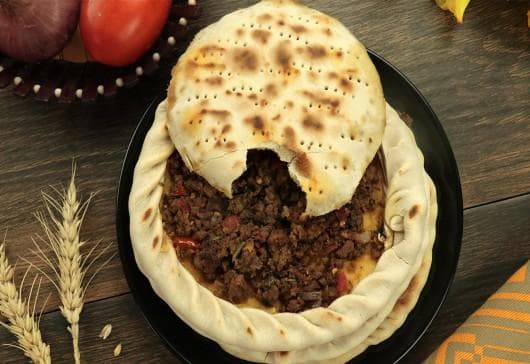
Stuffed breadSometimes called "Balti pizza" — a flat bread stuffed with spiced minced meat, onions and herbs, then baked or pan-fried. Originally from Hunza.
No. 05Butter teapo cha
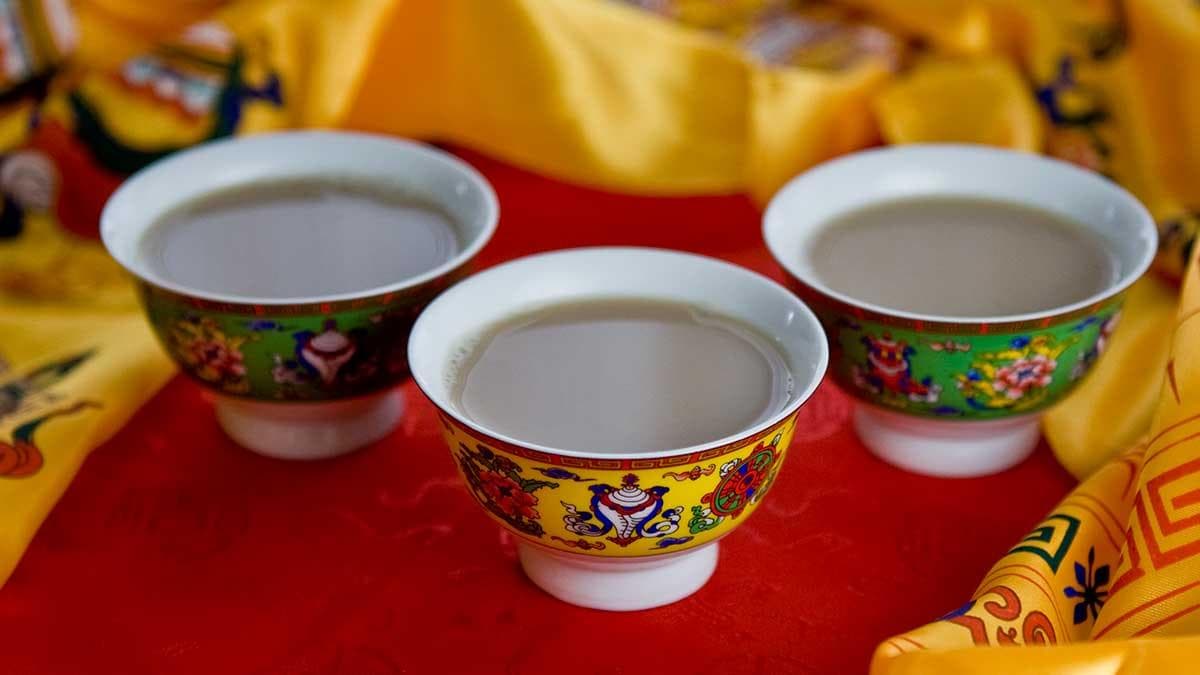
DrinkSalted tea churned with yak butter — the Tibetan high-altitude staple. Strange on first sip, restorative by the second cup.
No. 06Apricot, everything
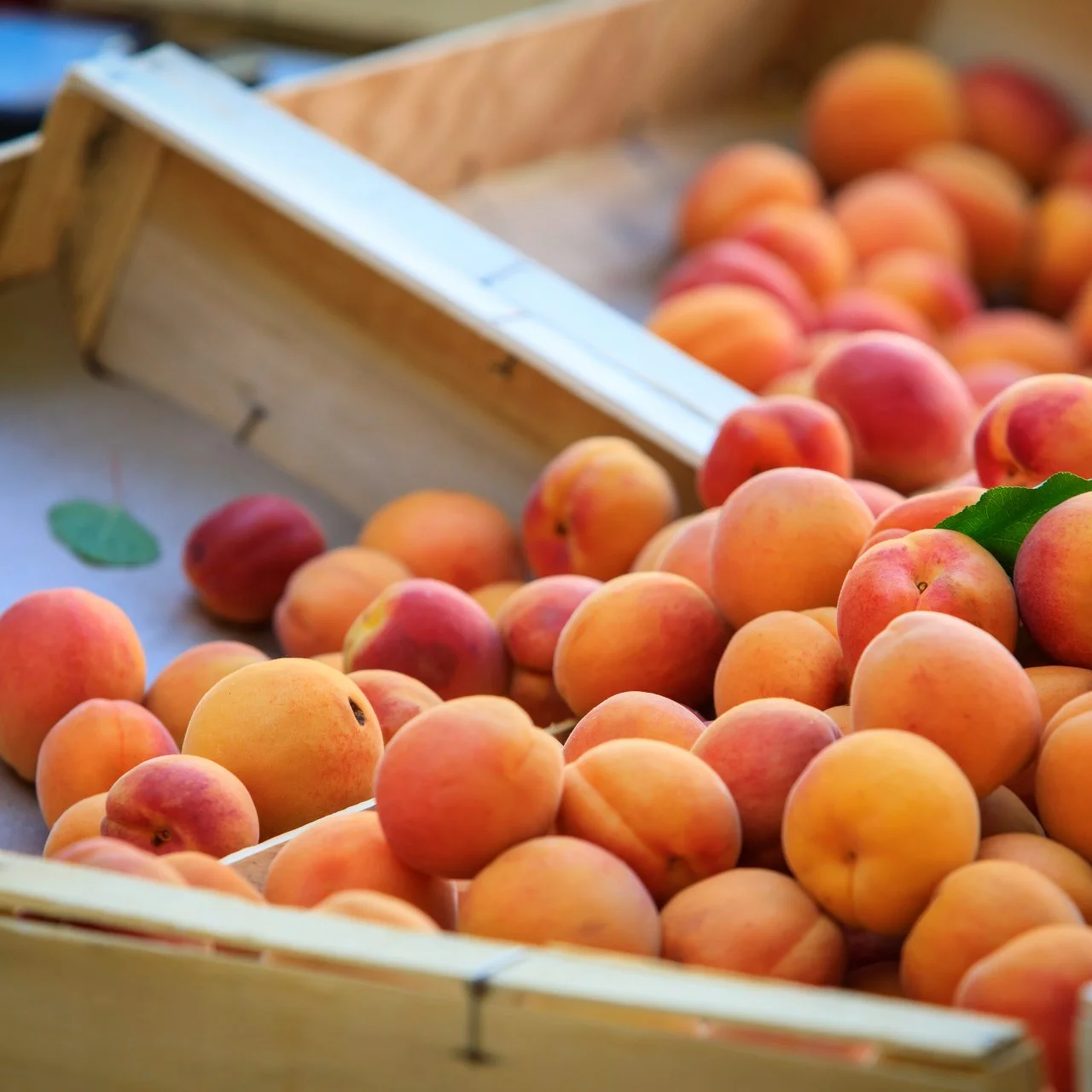
Fruit · oil · soupBaltistan's apricot crop is genuinely world-class. Fresh in June, dried and powdered for the rest of the year. Pressed for oil. Stirred into sweet-savoury soup.