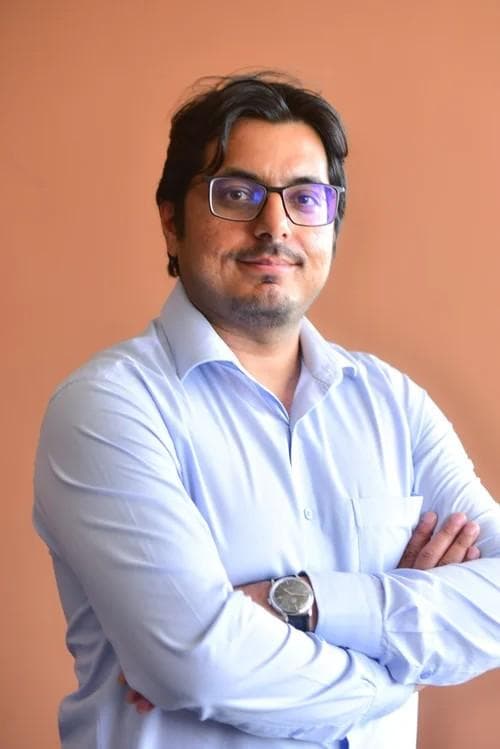
Adnan Qureshi
Over 26 million children are out of school in Pakistan, and many who are enrolled fail to reach foundational learning; only 50 to 60% of 5th graders perform at 2nd-grade level.
BIG IDEA
Full tablet learning for left-out kids
Watch the pitch
The mission
Make kids grade-level literate by making schools accessible to all.
How it works
One-room, solar-powered Digital MicroSchools: low-cost Android tablets running offline, gamified adaptive learning software for English, Math and local language, run by locally hired women facilitators, with ongoing community mobilization and governance dashboards.
The dream
Universal foundational literacy; learning poverty in Pakistan down from 78% to single digits; global replication of the Digital MicroSchool model. Doer and payer at scale: government.
Potential for impact at scale
Read against four questions, in the context of the organisation’s stage: is the impact good enough, is the problem big enough, is the model simple enough to deliver at scale, and is it cheap enough for whoever pays at scale.
Good enough · impact and evidence
6,500+ out-of-school children mainstreamed into formal or vocational pathways; the core metric is % improvement in K-5 learning outcomes.
Big enough · addressable market
26M out-of-school children in Pakistan alone, with deployments already in Pakistan, Bangladesh, Malawi and South Sudan.
Simple enough · to deliver at big scale
An offline-first kit: a room, tablets, software and a locally hired facilitator, designed for low-connectivity places. A franchise playbook to let others replicate it is the next build.
Cheap enough · for payers at scale
$132 per student per year at current scale, heading below $100 by early 2027.
So far
- 47,000+ out-of-school children reached since 2021
- 25,000+ children actively enrolled across 264 deployments (July 2026)
- Sindh government Phase 3 scaling plan: 300 more MicroSchools in 2027 and 300 in 2028